


/get in touch
Send us some basic info and we'll get in touch shortly.


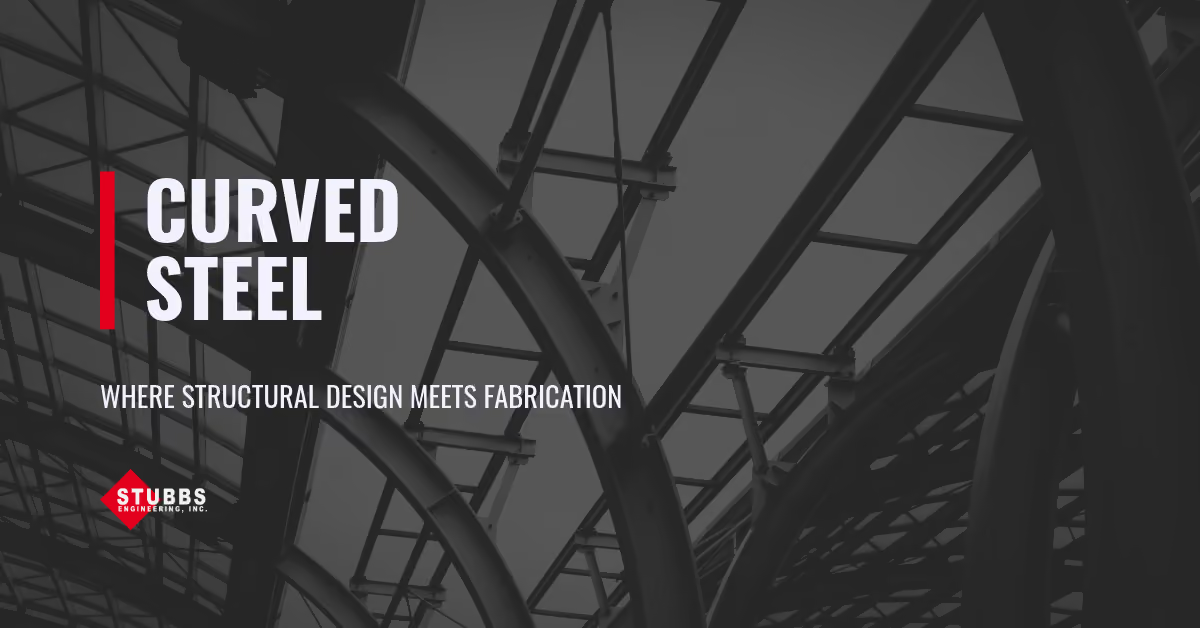
Curved Steel: Where Structural Design Meets Fabrication
Bending steel is typically achieved by cold-rolling a member through a series of passes that gradually introduce curvature. While many common AISC shapes (and aluminum shapes in the Aluminum Design Manual) can be curved, practical limits are driven by how the member behaves after rolling and how it will connect and install.
Key variables that set workable radius and tolerance include:
- Section type and size: Heavier shapes typically require larger radii to control flange/web distortion and residual stresses; slender shapes may be more sensitive to twist or local buckling.
- Orientation of the bend: Strong-axis vs. weak-axis rolling produces very different results, and some shapes are only practical in one orientation.
- Acceptable distortion and tolerances: Rolling can introduce sweep, camber variation, flange tilt, web warping, and local waviness, often critical for fit-up and exposed steel.
Construction engineering support alongside the shop can help:
- Confirm feasible radii and rolling methods based on section properties and bend orientation.
- Evaluate rolling impacts (distortion, residual effects, connection behavior) so capacity and stiffness match design assumptions.
- Detail connections for fit-up, weld access, splices, and tolerance stack-up on curved geometry.
- Provide clear fabrication criteria, true radius vs. chord, measurement points, templates, and inspection requirements, to reduce rework.
- Connections should be detailed with the curvature in mind, including bolt-hole alignment, cope geometry, weld access, splice locations, and erection sequencing.
When radius, tolerances, and connection strategy are coordinated up front, fabrication is cleaner and field installation is far more predictable.
If your project includes curved steel, early coordination can help reduce rework and keep fabrication and installation moving more smoothly. If you want to talk through a concept or upcoming challenge, our team is here to help.

other articles

Architecturally exposed structural steel requires more than sound structural design. Clear expectations for finishes, connections, tolerances, and erection sequencing help align the architect, engineer, fabricator, detailer, and erector before steel reaches the field.


Stubbs Engineering explains the benefits and design considerations of using fly ash in concrete, including durability, workability, and sustainability.
Structural retrofits require careful evaluation of existing conditions, load paths, and code triggers. Learn what to expect from the structural retrofit process, from field verification and openings to early coordination that helps reduce risk during construction.